Pamphlet for a New
Energy Policy
Minder
intelligent,
zichzelf verloren hebbend in
zelfgenoegzaamheid met dit
gezichtspunt,
tieren de minder gunstige activiteiten
welig en leidt het werk dat men doet
tot het onfortuinlijke van het
vernietigen van de planeet.
Krishna in de Bhagavad Gîtâ 16: 9
6) Four
points of order
The
explanation of the invention is
therefore just as important as the
invention itself. Inventors say
simple things like “energy
generated from magnets,” “from a
vacuum,” “from electrolysis,” or
“from crystals,” but that doesn’t
immediately make sense. Without a
shared understanding of the
vertical, underlying processes
that form the source of the energy
conversion, the practicing
engineer—who simply needs to learn
how to implement the principles of
conversion—will also find it
difficult to develop his own
application, and the patent office
will find it difficult to grant
him a patent. The horizontal truth
of the law of conservation of
energy, the existing order of
things, and the knowledge of
closed systems must also remain
intact. The future cannot exist
without the past, for the future
is nothing other than everything
from the past that we were able to
preserve and build upon. In the
HDT, repressive progress—that is,
renouncing one thing for the sake
of another—is not true progress,
but merely an exhaustion of
synergistic possibilities. The old
method remains an option; despite
the CD, the old vinyl record is
still a possibility.If the cell
phone isn't working, we'll go back
to using a landline. If the power
goes out, we'll bring out the
candles and oil lamps again. And
if the new energy generator
doesn’t work under certain
conditions, we may well need to
fall back on the old method and
its explanation. Newton’s
classical mechanics was never
truly replaced by Einstein.
Newton’s principles still apply in
many common situations. We don’t
discard elementary school when we
reach high school. Einstein merely
represents an extension, a further
refinement, a narrowing down, or a
description of an exception or a
refinement. Misconceptions or
outdated methods fall by the
wayside, as may well be the case
with the unnecessary use of fossil
fuels, but we always keep them in
mind in our history books or even
keep them available as a backup
system. The museum also has its
uses. There we still find the
clock that runs in sync with the
sun, the coal kit that can still
be used to make money today, and
the designs for the first nuclear
power plant, which we haven’t
quite gotten rid of yet. The description and
explanation of how the new
technology works must always go
hand in hand with its development.
Without thorough empirical
research to test the theory, there
will be no scientific or broader
societal recognition of the
insight, and the direct energy
transformer will not be produced
on an industrial scale. We
discovered effects and began to
reflect on them. And we are not
done yet. These insights lead to
new testable predictions and
developments. Alternative
explanations generate alternative
predictions and lead to different
paths that point toward the
future. Without this synergy of
taking the empirical knowledge of
the experimenting inventors
seriously, and engaging with
theorizing philosophers and other
pioneers, such an inventor and/or
theorist—who then exists so
one-sidedly for themselves outside
the method for developing
science—is written off as a loser,
a fool, a madman, or a fraud, or
even seen as a threat.
We raised the issue
of energy, researched what others
were doing, and broke the matter
down into simple terms; we
conducted our own experiment,
arrived at an explanation of the
facts, and incorporated a number
of other phenomena and
explanations into that framework.
If we want to properly complete
the method, we are now ready to
assess the integration of those
findings into broader society—the
larger context of a new world
order based on our findings. A
brilliant idea or a machine alone
won’t get us there. We are
changing the world; we are taking
the next step on the ladder of
human evolution. Without the
theoretical knowledge—which must
be conveyed alongside practical
demonstrations in textbooks and
classrooms—there will be no
commercial application, nor will a
new perspective truly hold water. We need a better
kind of intelligence if we want to
prevent the destruction of the
planet, as it is becoming apparent
under the old energy policies. New
patents, new lifestyles, and the
associated commercial developments
of marketable products will only
emerge once we have moved beyond
serendipitous discoveries, strange
uncontrollable effects, and
unique, unrepeatable achievements
to manageable, calculable,
predictable, and repeatable
methodIn the past, without this
combination of a plausible theory
and a practical application, many
scientists and inventors—who were,
in and of themselves,
well-integrated into society—such
as Nikola Tesla, Wilhelm Reich,
Bruce de Palma, and many others,
found themselves marginalized and
excluded from society. And this
blocked progress in knowledge and
its application in this field—so
essential to our shared lives—for
all of humanity. At the beginning
of the 21st century, the word
“ether” is still taboo in
scientific education, despite
Einstein’s formulations of its
relative truth. A unified field
theory, a theory of everything,
cannot ignore this concept. In
1963, Paul Dirac, Nobel laureate
in physics, stated the following
on this subject:s of alternative
energy conversion.
"...the
failure of physicists
around the world to find
such a satisfactory
theory, after so many
years of intensive
research, leads me to
believe that the
aetherless foundation of
physical theory has
reached the limits of
its capabilities, and to
see in the Aether a new
hope for the future".
Paul
Dirac, 1933 Nobel
Prize winner in Physics
Scientific American, The
Evolution of
Physicists Picture of
Nature, May 1963
|
Had what
happened to Wilhelm Reich, for
example, not occurred—he died of a
heart attack on November 3, 1957,
at Lewisburg Federal Penitentiary
—and had we been more
paradigmatically adept with the
pioneers, then perhaps we would
not now have a global war over oil
and gas resources and such a
gloomy and fiercely contested,
one-sided, economically determined
idea of world order... That is how
important the philosophical
foundation is now. Even if that
foundation may ultimately not be
the decisive factor, we must
nevertheless continue to engage
with it. We recognize the
one-sidedness that runs counter to
this as materialism, as a need for
false certainties, as an escape
into the actually burning matter
of the worldly contradictions of
the ego—which, with all its
politicization, we can now easily
recognize in being entangled in
the material energy issue of
horizontal, one-sided thinking. In this
entanglement, the idea of commerce
prevails—the notion that our
happiness is for sale—a view that,
in a capitalist context, even
tends to supplant democracy, even
though democracy is, in fact, the
ideal symbol of free trade. While
a world order must certainly
embody a spirit of commerce, it
cannot, of course, consist solely
of that. Nor does this immediately
require an additional philognostic
political party, but first and
foremost a conceptual model or
paradigm such as the HDT—however
provisional in nature—to achieve
relativization and consolidation
in a broader scientific sense than
that of the economic and
mechanical thinking that normally
dominates energy policy.We need a paradigm
like this conceptual model, which,
in principle—as outlined in this
pamphlet—can be widely understood
by society, supported, and further
developed so that it can be
incorporated into education. By
accepting the concept of a
dynamic, relative ether active in
nature, anyone can understand that
we can extract energy from it just
as easily as from the power of
wind, sun, and water. Space, too,
functions as an energetic field
that can be harnessed. Period.
Whatever else you choose to call
it.
In addition to
economic and scientific thinking
aimed at energy production and
management, there are two other
aspects involved in a sound
understanding of the world order.
These are the interests of an
overarching world religion and a
form of world government. To
resolve the problem of conflicting
local religions that exist around
the concept of the ether and the
spiritual interest supported by
the HDT, we must
discuss the religions and their
place in society. Secondly, we
must also discuss the form of
government that is acceptable to
the entire world population—a form
of governance that serves both the
interests of the whole and those
of the individual state. Een soort van
win-win formule simpel gezegd.
This concept of order must, on the
one hand, resolve the
contradictions of the current
democratic system and, on
the other hand, maintain a
positive connection with the
control of energy as it exists in
the natural (relative) ether. From
the perspective of the HDT, we
speak—in respect for the person in
the fullest sense—first and
foremost, at the highest level of
differentiation, of the importance
of man, woman, intelligence, and
the spirit. The spirit is central
to the various forms of
association in the natural and
human sciences, with the freedom
from illusion as the guiding
theme: what we think must
correspond to what we see.
Intelligence forms the counterpart
to the restless spirit, which,
when left to itself, is always
focused on matter. The mind requires
the guidance of the intellect
through a certain uniting
that must bring order to the
person. This ordering, for the
sake of the intellect, takes place
within the realm of religiosity
and the private sphere, where the
individual first and foremost
seeks peace and security.
 The men in society
are discussing the order needed to
ensure that no one is
shortchanged, so that a sense of
community is preserved and does
not lead to criminalization. We no
longer call that order nobility,
but democracy. Consultation with
the people is the essence of good
and stable governance that must
keep pace with the times. Viewed
in this light, the man of the new
model no longer wages wars with
weapons for the sake of unilateral
world domination and dictatorship,
but must now engage in politics
with his paradigmatic views and
concepts to prevent armed
conflicts in a global mindset
that, unfortunately, is often
based more on territories or
national identity than on a
natural, cyclical understanding of
the temporal order of our material
life, as the HDT perceives it.
A woman
who has not yet achieved emancipation
is concerned with earthly matters:
the home, financial security, and
supporting her husband in his
worldly duties. But when she
develops a sense of social and
moral responsibility beyond the
private sphere, she is recognized
for what she truly is: a soul, a
person with a spirit. Only when
both man and woman are emancipated
together is there a possibility
for love and happiness in which
the ego can dissolve, sexism can
disappear, and the soul - which is
the true equalizer of humanity -
can be found. For the completeness
of our personal interests as human
beings, the spiritual half of the
HDT, which stands for the
interests of the soul, is at least
as important as the material half. The HDT implies an
understanding of emancipation as a
process of becoming equal within
the witness of self-awareness that
we call the soul. In that regard
as well, we must think vertically:
moving away from merely
rationalizing bourgeois
attachments and away from the
sorrow caused by the absence of a
true collective intelligence and
humanity. Thinking solely
horizontally in materialistic
terms - which hold that men and
women, by fighting against
celibacy, must devote their
thinking and intelligence to the
satisfaction of their own and
others’ material needs - will not
be enough to pull the cart. The men in society
are discussing the order needed to
ensure that no one is
shortchanged, so that a sense of
community is preserved and does
not lead to criminalization. We no
longer call that order nobility,
but democracy. Consultation with
the people is the essence of good
and stable governance that must
keep pace with the times. Viewed
in this light, the man of the new
model no longer wages wars with
weapons for the sake of unilateral
world domination and dictatorship,
but must now engage in politics
with his paradigmatic views and
concepts to prevent armed
conflicts in a global mindset
that, unfortunately, is often
based more on territories or
national identity than on a
natural, cyclical understanding of
the temporal order of our material
life, as the HDT perceives it.
A woman
who has not yet achieved emancipation
is concerned with earthly matters:
the home, financial security, and
supporting her husband in his
worldly duties. But when she
develops a sense of social and
moral responsibility beyond the
private sphere, she is recognized
for what she truly is: a soul, a
person with a spirit. Only when
both man and woman are emancipated
together is there a possibility
for love and happiness in which
the ego can dissolve, sexism can
disappear, and the soul - which is
the true equalizer of humanity -
can be found. For the completeness
of our personal interests as human
beings, the spiritual half of the
HDT, which stands for the
interests of the soul, is at least
as important as the material half. The HDT implies an
understanding of emancipation as a
process of becoming equal within
the witness of self-awareness that
we call the soul. In that regard
as well, we must think vertically:
moving away from merely
rationalizing bourgeois
attachments and away from the
sorrow caused by the absence of a
true collective intelligence and
humanity. Thinking solely
horizontally in materialistic
terms - which hold that men and
women, by fighting against
celibacy, must devote their
thinking and intelligence to the
satisfaction of their own and
others’ material needs - will not
be enough to pull the cart.
Thinking vertically, the parallel
must be drawn with energy
generation from the ether using
the new technology of the newly
invented graviton pumps. Without
that parallel, the paradigm cannot
succeed, and we will once again be
stuck with lost, isolated,
dismissed, ridiculed, and
forgotten inventors, alternative
thinkers, and cultures of
innovation. In practical terms,
the HDT, based on the idea of
evolution and the transfer of
knowledge, the necessity of stable
democratic governance, the
concrete satisfaction of material
needs, and respect for spiritual
truth and the integrity of the
person, respectively: 1)
scientific, 2) political, 3)
economic, and 4) religious
considerations in
connection with the concept of the
ether. Considerations that all
play an equally significant role
in the establishment of a coherent
global governance, a new world
order, an order in which the unity
of the classical ether—or a
balance in the relative
ether—prevails within a healthy
diversity, both in a cultural and
a natural sense. This aligns with
the European Union’s dictum, for
example, of unity in diversity
(see also the Bhagavad Gîtâ
9.15). The main reason
why humanity’s progress in
addressing the energy problem is
not happening as quickly as one
might expect lies not only in the
obstacles mentioned at the end of
Chapter Four, in the fact that
such scientific innovation is
simply too complex for a single
individual to grasp, and has too
many social—that is, religious,
political, and
economic—consequences to break
through as a way of thinking and
acting without further ado. Yet,
with the necessity of a new energy
policy, one can see the paradigm
of a new world order emerging as
an inevitable consequence of our
cultural and scientific
developments. Ultimately, for
practical reasons, one cannot
avoid promoting these four aspects
simultaneously as a single
coherent whole. The arguments for
this are as follows:
 1) 1)
From a scientific
perspective, therefore, the
concept of the ether must be
reevaluated in terms of its
relativity. We have already
mentioned various signs that this
process is indeed already
underway. This pamphlet is part of
that effort. In conjunction with
this development, the concept
of time will also need to be
revised.
For the ether cannot be
separated from time and matter.
Matter constitutes the
electromagnetic condensation of
the dark energy of the
primordial state, and time
determines the existence of that
matter within the energetic
vacuum of outer space. Matter is
never perfectly static; the
relative ether that maintains
the order of matter is
constantly in a state of dynamic
equilibrium. Under the influence
of time, it is always in motion,
with fields moving through
fields and fields moving toward
and away from one another, and
it is therefore time that
enables the actual
transformation of the energy of
the static field into an
electric current of electrons by
skillfully utilizing the
dynamics—or quantum mechanical
uncertainty—of the relative
ether.In quantum
mechanics, the position and
momentum of particles do not
have precise values. This is
known as Heisenberg’s
uncertainty principle. 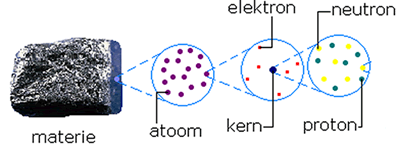 Werner
Karl Heisenberg
(1901–1976) was a German
scientist who received the Nobel
Prize in 1932 for developing
quantum mechanics, the theory
describing the relationship
between indivisible units of
energy—known as quanta—and
matter. He also proposed the
idea of the proton-neutron
structure of the atomic nucleus.
For elementary matter, there is
a “probability distribution.”
There is always a certain
uncertainty regarding which
field matter belongs to and to
what extent: the local, the
universal, and the spacetime
fields are in constant
interaction at the particle
level and beyond. Time, space,
and matter are all that can be
seen in the world, and thus,
with the redefinition and
revaluation of the relative
ether as a specific property of
gravity in space, relativity
regarding the concept of time
must also be politically invoked
and respected. This means that
the simultaneity that Einstein
rejected is therefore out of the
question for us in civil
society, so that average times,
solar times, and daylight saving
times must be phased out
politically and ultimately
abolished. As far as the taboo
on simultaneity is concerned,
Einstein was right, according to
the HDT. Legal time regulations
must not conflict with
scientific principles; that must
be government policy. No more
scientific tables in the
political trash bin. The dictum
then reads: we do indeed share
the moment synchronously, but
time is always different in
different places, at least
latitudinally (both longitudinal
and latitudinal time observance
require unequal hours that are
very difficult for citizens to
observe; only Islam does
so—largely—with
prayer times). Werner
Karl Heisenberg
(1901–1976) was a German
scientist who received the Nobel
Prize in 1932 for developing
quantum mechanics, the theory
describing the relationship
between indivisible units of
energy—known as quanta—and
matter. He also proposed the
idea of the proton-neutron
structure of the atomic nucleus.
For elementary matter, there is
a “probability distribution.”
There is always a certain
uncertainty regarding which
field matter belongs to and to
what extent: the local, the
universal, and the spacetime
fields are in constant
interaction at the particle
level and beyond. Time, space,
and matter are all that can be
seen in the world, and thus,
with the redefinition and
revaluation of the relative
ether as a specific property of
gravity in space, relativity
regarding the concept of time
must also be politically invoked
and respected. This means that
the simultaneity that Einstein
rejected is therefore out of the
question for us in civil
society, so that average times,
solar times, and daylight saving
times must be phased out
politically and ultimately
abolished. As far as the taboo
on simultaneity is concerned,
Einstein was right, according to
the HDT. Legal time regulations
must not conflict with
scientific principles; that must
be government policy. No more
scientific tables in the
political trash bin. The dictum
then reads: we do indeed share
the moment synchronously, but
time is always different in
different places, at least
latitudinally (both longitudinal
and latitudinal time observance
require unequal hours that are
very difficult for citizens to
observe; only Islam does
so—largely—with
prayer times).
Thus, the existing
liberalization of the concept of
time in business management at
the beginning of the 21st
century is scientifically
supported by legal measures that
better accommodate a local,
personal, decentralized, and
more natural temporal order.
Clocks may then only keep the
same time if they are located in
the same physical space. At a
distance—at least in a
latitudinal sense—they must
always indicate a different
time. Without such an
intervention in the civil order,
the basic principle of
relativity—and the respect for
it through the ether
machines—and the unity of
consciousness within the
diversity of matter would be
violated, resulting in a
political and civil unity that
comes at the expense of
diversity. That would constitute
a form of induction (false
unification) and loss of
consciousness that is downright
dangerous to mental public
health and the development of
culture (synergy is lost in
compensations). Such falsehood
must be combated on all fronts.
False unity at the expense of
distinctions is thus a taboo
developed through the natural
sciences. Generalizing is
dangerous (everyone in a
“uniform,” so to speak). A
tendency toward false
unification with time, as
developed in the twentieth
century alongside the culturally
neurotic counterpart of
individualism, is therefore
rationally and politically
irresponsible and unacceptable.
This new paradigm must therefore
be accompanied by a new clock:
the same clock we had before,
but now with an additional gear
that is astronomically
controlled to account for the
so-called time
equation (the difference
between a sundial and a standard
time clock), so that, at
least in terms of latitude, time
on Earth varies by longitude
(see solar
tempometer). The
calendar, too, must then undergo
a transformation in which, on
the one hand, the day and the
week are aligned with—and
allowed to follow—the order of
the sun, and on the other hand,
a kind of day off is introduced
that cuts across that solar
order in accordance with the
phases of the moon, as if it
were a wandering Saturday (see
the Full
Calendar of Order). Linear
weeks as we know them from
standard time also constitute a
kind of false unification in
which the dynamics resulting
from the relative ether are
denied; in other words, the
weekly order must be
intercalated with a fifteenth
day (study day? fasting day?) to
fit into a month, much as was
done in the old Julian calendar.
Without this respect for the
natural dynamics of celestial
bodies based on a relative
ether, there can be no question
of a better collective and civic
understanding of the ether. And that concept
is essential for the new energy
policy. Einstein clearly stated
that time depends on how the
observer’s position changes
relative to the planet. If we do
not move around much
geographically, this amounts to
respecting apparent astronomical
solar time. Viewed this way, we
cannot avoid a revision of our
time system and the legal
measures that go with it. Since
this takes us back to old
structures, we have nothing to
fear from it; it is still in our
cultural genes. Philosophically
and politically, we are then
faced with the problem of a
paradigmatic struggle between
the emotional, pragmatic
politics of “modern” preferences
and bourgeois attachments from
the twentieth century and the
new-rational-relativistic
preferences of the 21st-century
restoration of classical science
in a syncretic guise. This new
form of relativism—a rational
one—is inevitable if it is to
serve as the theoretical
foundation for the new
technology of direct energy
conversion. We simply need the
rational explanation provided by
the new relativistic ether
machines, and we cannot view
this as something that can exist
in isolation from bourgeois
culture.
2) Of course, politics is
also being shaped by this new way
of thinking. The concept of
democracy needs to be redefined.
We have already written about this
in “The Ether for Real” (on
the website: Order,
Democracy, and Utopia). We
need a democracy in which the
individual party—the collective
group ego, so to speak—can never
again dominate unilaterally.
Democracy faces the paradox that
the political party poses the
greatest threat to its own
survival. What must disappear is
the mixture of fear and desire
regarding democracy that prevails
among the citizenry, who are
constantly hoping for victories or
fearing a dictatorship or decline.
In the HDT, this state is
recognized as a state of
psychological suffering, as a
symptom of a global cultural
neurosis. People are wary of the
democracy that led to fascism,
communism, fundamentalism, and
ultimately also the misery of
capitalism—the capitalism of the
pseudo-aristocracy of financial
elites who, just like the French
nobility before the French
Revolution, have too little
compassion for the needs of the
local global population. We cannot tell
Africans and other Third World
countries to “eat cake,” as
Marie-Antoinette Bonaparte said at
the end of the 18th century. The
war on terrorism and against
criminal subcultures (was 9/11 a
so-called “false flag” operation?
was the CIA criminal?), the fight
against AIDS (caused by HIV or
not?), and the war on drugs
(legal/illegal?) and gambling,
alcohol, and sex addiction
(regulated by law or banned?),
prove at the beginning of the 21st
century that capitalism in and of
itself can never form or find the
peace of a sound social balance
and a corresponding state of
health. Freedom does not equate to
righteousness.
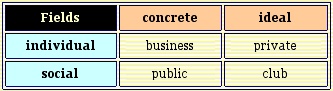 We need a concept of democracy
that no longer treats these
symptoms of materialism as
isolated problems, but rather
addresses the root cause—poor
governance (a flawed temporal
order)—through civic virtues:
the regulation of desire, the
ego, intelligence, and
solidarity. The disease must
instead be tackled at its root
with an improved, more
scientific understanding of
ether and time and with a
corresponding improved energy
policy. Democracy as the
highway to a one-sided,
political imposition of a
socialist, capitalist,
fundamentalist, or
fascist/militarist nature must
be prevented. The hope for the
democratic victory of any
party must be definitively
dismissed as illusory and
destructive. Through the
HDT’s philosophy of knowledge,
we strive politically for
cooperation within
all-encompassing
coalitions—that is, for
integrity—rather than for the
victory of one segment of
society over another. The
political structure of
democracy is like a body with
four limbs. These require a
central administration that is
honest, stable, and
scientifically trained. For
the time being, science—as the
youngest religion (worshiping
the ether with true time!)—is
assigned this task, with the
mission of keeping its own way
of thinking fresh and
up-to-date, and not allowing
it to crumble into a false
elitism through competition
for subsidies and
sponsorships. This can only be
achieved by isolating each of
these paetipolitical
tendencies toward
dictatorship—as a distinct
interest of civic
virtue—within a separate
sphere of action in accordance
with the new order of the
times as described above, and
by balancing them with other
interests. This can be
achieved administratively
through a redistribution of
seats in the parliaments and a
division into ministries and
subdepartments, in such a way
that these align better with
one another and with the
nature of the identity of the
ordinary citizen in terms of
his age (status) and
profession (class; see A
Small Philosophy of the
Association).
We need a concept of democracy
that no longer treats these
symptoms of materialism as
isolated problems, but rather
addresses the root cause—poor
governance (a flawed temporal
order)—through civic virtues:
the regulation of desire, the
ego, intelligence, and
solidarity. The disease must
instead be tackled at its root
with an improved, more
scientific understanding of
ether and time and with a
corresponding improved energy
policy. Democracy as the
highway to a one-sided,
political imposition of a
socialist, capitalist,
fundamentalist, or
fascist/militarist nature must
be prevented. The hope for the
democratic victory of any
party must be definitively
dismissed as illusory and
destructive. Through the
HDT’s philosophy of knowledge,
we strive politically for
cooperation within
all-encompassing
coalitions—that is, for
integrity—rather than for the
victory of one segment of
society over another. The
political structure of
democracy is like a body with
four limbs. These require a
central administration that is
honest, stable, and
scientifically trained. For
the time being, science—as the
youngest religion (worshiping
the ether with true time!)—is
assigned this task, with the
mission of keeping its own way
of thinking fresh and
up-to-date, and not allowing
it to crumble into a false
elitism through competition
for subsidies and
sponsorships. This can only be
achieved by isolating each of
these paetipolitical
tendencies toward
dictatorship—as a distinct
interest of civic
virtue—within a separate
sphere of action in accordance
with the new order of the
times as described above, and
by balancing them with other
interests. This can be
achieved administratively
through a redistribution of
seats in the parliaments and a
division into ministries and
subdepartments, in such a way
that these align better with
one another and with the
nature of the identity of the
ordinary citizen in terms of
his age (status) and
profession (class; see A
Small Philosophy of the
Association).
To prevent
the fallacy of such a system
(a caste system or a
class-based society) and to
guarantee the equality of
citizens, there must—along
with a principled and
structural vigilance against
false unifications—also be
respect for the levels of
abstraction at which a person
can function and the
experience they possess.
Citizens are equal in their
emancipated respect for
natural diversity. This must
always be kept in mind. A
better differentiation and
distribution of political and
economic power thus
constitutes the remedy against
imbalance. Such a more
identity-conscious politics,
which, through more
differentiated electoral
groups (until now: standing
parliamentary committees),
better represents the
individual administratively
and combats individualism as a
culture-neurotic symptom, must
always be based on human
rights.
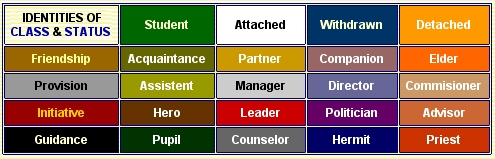
No one should
be cast aside because of money
or for any other reason; this
must be enshrined in the
constitution. Basic security
is an absolute prerequisite
for being able to participate
in society relatively
stress-free and in good
health, or to change one’s
life path. A full-time
volunteer is, in human terms,
just as valuable as a salaried
employee, and citizens must
therefore be able to freely
choose between these two
fundamental identities within
a humane labor system where
unemployment, in principle, no
longer exists; unemployment
would then be more of a
neurotic symptom of a personal
identity crisis. You work for
a salary under a boss, or for
the God of volunteer work, and
the only option left is to be
a criminal or ill, and society
has provisions for that as
well, albeit with less freedom
of choice. The free will of a
righteous and healthy
individual to choose whether
or not to participate at this
or that level of engagement or
sphere of action in civic
virtue is essential. A system
is complete if it respects the
duality of spirit and matter
and if one can just as easily
choose material progress as
spiritual progress. The two
cannot exist without each
other, so it is also an
illusion to try to exclude one
with the other, as is often
envisioned in the struggle
between capitalism and
fundamentalism. The salvific
system must be comprehensive
and inclusive—i.e., everyone
must be included but not
compelled—and cannot claim
justice through exclusion or
exclusivity. Even
non-participation, even in
this new order, would then
fall under a category governed
by law, perhaps still under
the old legislation. For
example, one signs a contract
of (digital) cooperation
(transparency or oversight of
transactions and activities)
with the government, or one
opts for the old freedom of
liberal privacy, with the
attendant problems of
monitoring passive capital,
taxes, and the like. The basis
of political trust must be
found in that freedom of
choice. After all, it will not
be immediately clear whether
such a status of cooperation
(SoC) actually cooperates
better than the preference for
privacy. Purity is an ideal
for which people have been
praying for centuries.
 3) There is always
much to be said about
money, and a new energy
policy will inevitably bring
with it a new system of revenue
and expenditure. The cultural
landscape is shifting, and the
economy must shift with it. That
is inevitable. Progress cannot
be sacrificed to Mammon; that
would be cultural suicide. A
centrally controlled digital
economy—as envisioned by those
who are monetarily progressive
and eager to pave the way for
the new world order—can only
exist if the old local economy
continues to function as a
backup system and citizens
always have a free choice
without being demonized. We are
not bad if we do not serve big
capital, and we are not bad if
we do. Unity in diversity
implies a shared awareness of
all dualities—rich and poor, man
and woman, concrete and
abstract, etc. Economically,
therefore, in conjunction with
energy policy and the political
reorientation toward civic
identities, there must be decentralization
and liberalization. Each
identity group—rather than each
nation or traditional political
party—will then have its own
local economic policy, with the
same safeguards against
preferential treatment as those
implemented in the democratic
reform designed for electoral
groups tailored to civic
identities. With
increasing integrity and
stability of governance, as
described in the previous point,
greater refinement and
effectiveness are also possible.
After all, the new energy policy
has saved the synergy of
society. This also counteracts
one-sided profiteering and the
corresponding political
imbalance. With direct energy
generation, the monopoly and
exploitation of energy
distribution are automatically
broken up as well, particularly
with regard to decentralization. For this reason,
the entire economic system must
be decentralized to a
significant extent: after all,
energy production can then be
handled simply by purchasing a
direct transformer, and all
electricity and gas bills will
be eliminated if a private
generator is more cost-effective
than the central utility. This
will lead to a liberalization of
economic power that is more
specifically determined by food,
water, and shelter—matters that
have always been managed more
decentrally—and in this way,
people will become less
dependent on and less determined
by what were previously the
centrally directed, economically
motivated, collective actions in
the realms of diplomacy, the
financial elites, and the art of
war. 3) There is always
much to be said about
money, and a new energy
policy will inevitably bring
with it a new system of revenue
and expenditure. The cultural
landscape is shifting, and the
economy must shift with it. That
is inevitable. Progress cannot
be sacrificed to Mammon; that
would be cultural suicide. A
centrally controlled digital
economy—as envisioned by those
who are monetarily progressive
and eager to pave the way for
the new world order—can only
exist if the old local economy
continues to function as a
backup system and citizens
always have a free choice
without being demonized. We are
not bad if we do not serve big
capital, and we are not bad if
we do. Unity in diversity
implies a shared awareness of
all dualities—rich and poor, man
and woman, concrete and
abstract, etc. Economically,
therefore, in conjunction with
energy policy and the political
reorientation toward civic
identities, there must be decentralization
and liberalization. Each
identity group—rather than each
nation or traditional political
party—will then have its own
local economic policy, with the
same safeguards against
preferential treatment as those
implemented in the democratic
reform designed for electoral
groups tailored to civic
identities. With
increasing integrity and
stability of governance, as
described in the previous point,
greater refinement and
effectiveness are also possible.
After all, the new energy policy
has saved the synergy of
society. This also counteracts
one-sided profiteering and the
corresponding political
imbalance. With direct energy
generation, the monopoly and
exploitation of energy
distribution are automatically
broken up as well, particularly
with regard to decentralization. For this reason,
the entire economic system must
be decentralized to a
significant extent: after all,
energy production can then be
handled simply by purchasing a
direct transformer, and all
electricity and gas bills will
be eliminated if a private
generator is more cost-effective
than the central utility. This
will lead to a liberalization of
economic power that is more
specifically determined by food,
water, and shelter—matters that
have always been managed more
decentrally—and in this way,
people will become less
dependent on and less determined
by what were previously the
centrally directed, economically
motivated, collective actions in
the realms of diplomacy, the
financial elites, and the art of
war.
Solving the
energy problem will not, of
course, immediately solve the
world’s climate, water, and food
problems, but there is no doubt
that solving the energy problem
will also have consequences for
the other problems—consequences
that cannot yet be fully
anticipated. As for the
redistribution of political and
economic power, the new paradigm
offers a conceptual blueprint
for a future world order,
bearing in mind that this new
way of thinking is closer to
nature and more directly
connected to it. This shifts the
balance of power from the
structure of the pragmatic,
reductionist culture to the
order of the genetic,
nature-conditioned human who
recognizes the importance of his
self-preservation in that of the
entire human species as well as
in the interest of all other
life forms on and beyond Earth.
First and foremost, the temporal
order constitutes a biological
genetic program. Genes embody
the conditioning of living
beings throughout their
evolution, and this also applies
to the secondary cultural cell
membrane circuits—the so-called
sensitizations—that an
individual or a subculture may
possess alongside their genes.
The genes form the blueprint,
the architectural plan of the
material manifestation of our
species, and culture must,
rationally speaking, not
conflict with that power of the
primary natural order of matter,
space, and time. We must not
allow culture to alienate us
once again so disastrously from
the natural order of our own
planet as we did in the
twentieth century. As our
understanding of time—which is
more closely aligned with the
relative nature of the
ether—evolves, culture will
become more in tune with, and
more harmonized with, the order
of nature. With economic
implementation and the
reinforcement of civic behavior
in this regard, there will be
less stress and friction with
nature, leading to a better
(collective) conscience in
relation to nature on the one
hand, and to each other’s
individual nature and culture on
the other. As a result, our
chances of survival on the
planet are significantly
improved through a more
collective, ecologically
conscious policy.
 4) Finally,
there is the religious question.
Religion constitutes, to a greater
or lesser extent, the old school
of freedom from illusion in
connection with the ether, whereas
science constitutes the new school
for combating illusions through
their relativity. Science, being
ego-based, tends to fragment into
conflicting camps, with the
natural sciences sometimes
invalidating and rejecting the
social sciences, and at other
times the humanities invalidating
and rejecting the natural
sciences. But science is, after
all, more than just geometry and
architecture or a prayer and a
therapeutic session. Following the
Indian example of the so-called darshanas,
filognosy recognizes six fundamental
perspectives, each with its
corresponding forms of logic
and intelligence. Not only are
philosophy and methodology an
absolute prerequisite for
successful natural science, but
the social, cultural, human, and
behavioral sciences are also an
inevitable consequence when a
scientific paradigm must be
integrated into an educational
system and a sound system of
incentives must be in place to
reward desirable and appropriate
(local, decentralized) ethical and
ecologically positive behavior.
The duality between teacher and
student, but also between citizen
and politics, is something that is
politically and administratively
inevitable; thus, the analytical
and spiritual self-realization
aspect of human reality cannot be
excluded from a syncretic,
comprehensive science. And this
applies no less to theology and
political science. The ego with
which we are constantly grappling
in politics is still best
addressed within the various
religions that continue to succeed
in uniting the full diversity of
entire societies under a single
personalistic umbrella. The danger
of distorting that ego into
fundamentalist fanaticism must be
recognized as stemming from a
philosophical/paradigmatic
deficiency. The idea behind the
new paradigm is that a more
nuanced respect for the impersonal
nature of time and the ether
automatically enables a more
nuanced respect for the
individuality of persons; in other
words: the better one is with
numbers, the better one is with
the person. In this context,
we can be good within a bad
system, bad within a good system,
bad within a bad system, and good
within a good system. The moral
framework of a certain spiritual
coherence, the attitude, and the
behavior of people in a
well-functioning society - as a
whole, as a single system - can
coexist in these various ways
without any direct causal link
being evident. Should we then
choose to be good with a bad
system? The rebel and the
terrorist say that is treason,
even if you are a law-abiding but
narrow-minded citizen. We have
maintained this for a very long
time, and the problem with it is
that we lose the synergy, the
space we have for the positive
values of social life. The system
drains our goodness. It is
unsustainable. Should we then be
bad within a good system? Bad
within our new system, in the
spirit of fighting fire with fire
and evil with evil? That is
hypocrisy, and a very destructive
form of treachery - a misguided
form of propaganda, so to speak.
Then you’re not called a hero, but
a criminal or terrorist who must
be punished or killed. Must we be
evil under a bad system? The
pacifist argues that this would
entail a war that not only
perpetuates and reinforces the
system itself - as is the case
with our vague idealism rooted in
the standard time established
during World War II - but also
causes people to lose their faith
and trust in the natural, divine
order of humanity and reason. Is
there a greater catastrophe
imaginable? So should we then be
good under a good system? It is
clear that the latter must be
chosen, even if that is a heavy
burden - a real Jesus-like task -
for the first sheep to cross the
dam. You must be a saint or a
martyr in your adherence to the
rules of conduct, in shouldering
the burden of an existing
dysfunctional society, and in
consistently advocating for a good
system; otherwise, we are
traitors, hypocrites, criminals,
and warmongers. That covers the
attitude, our mindset - the
anti-material, spiritual aspect of
the HDT. By truly developing this
behavior collectively in a
practical way and by putting the
hierarchical structure of our
material reality into practice
with the HDT, we are complete; we
are truly of God. Without that
respect for the practical side of
upholding the distinction between
direct and indirect sustainable
energy generation, we are merely
good within a bad system, and that
is making a deal with the devil. 4) Finally,
there is the religious question.
Religion constitutes, to a greater
or lesser extent, the old school
of freedom from illusion in
connection with the ether, whereas
science constitutes the new school
for combating illusions through
their relativity. Science, being
ego-based, tends to fragment into
conflicting camps, with the
natural sciences sometimes
invalidating and rejecting the
social sciences, and at other
times the humanities invalidating
and rejecting the natural
sciences. But science is, after
all, more than just geometry and
architecture or a prayer and a
therapeutic session. Following the
Indian example of the so-called darshanas,
filognosy recognizes six fundamental
perspectives, each with its
corresponding forms of logic
and intelligence. Not only are
philosophy and methodology an
absolute prerequisite for
successful natural science, but
the social, cultural, human, and
behavioral sciences are also an
inevitable consequence when a
scientific paradigm must be
integrated into an educational
system and a sound system of
incentives must be in place to
reward desirable and appropriate
(local, decentralized) ethical and
ecologically positive behavior.
The duality between teacher and
student, but also between citizen
and politics, is something that is
politically and administratively
inevitable; thus, the analytical
and spiritual self-realization
aspect of human reality cannot be
excluded from a syncretic,
comprehensive science. And this
applies no less to theology and
political science. The ego with
which we are constantly grappling
in politics is still best
addressed within the various
religions that continue to succeed
in uniting the full diversity of
entire societies under a single
personalistic umbrella. The danger
of distorting that ego into
fundamentalist fanaticism must be
recognized as stemming from a
philosophical/paradigmatic
deficiency. The idea behind the
new paradigm is that a more
nuanced respect for the impersonal
nature of time and the ether
automatically enables a more
nuanced respect for the
individuality of persons; in other
words: the better one is with
numbers, the better one is with
the person. In this context,
we can be good within a bad
system, bad within a good system,
bad within a bad system, and good
within a good system. The moral
framework of a certain spiritual
coherence, the attitude, and the
behavior of people in a
well-functioning society - as a
whole, as a single system - can
coexist in these various ways
without any direct causal link
being evident. Should we then
choose to be good with a bad
system? The rebel and the
terrorist say that is treason,
even if you are a law-abiding but
narrow-minded citizen. We have
maintained this for a very long
time, and the problem with it is
that we lose the synergy, the
space we have for the positive
values of social life. The system
drains our goodness. It is
unsustainable. Should we then be
bad within a good system? Bad
within our new system, in the
spirit of fighting fire with fire
and evil with evil? That is
hypocrisy, and a very destructive
form of treachery - a misguided
form of propaganda, so to speak.
Then you’re not called a hero, but
a criminal or terrorist who must
be punished or killed. Must we be
evil under a bad system? The
pacifist argues that this would
entail a war that not only
perpetuates and reinforces the
system itself - as is the case
with our vague idealism rooted in
the standard time established
during World War II - but also
causes people to lose their faith
and trust in the natural, divine
order of humanity and reason. Is
there a greater catastrophe
imaginable? So should we then be
good under a good system? It is
clear that the latter must be
chosen, even if that is a heavy
burden - a real Jesus-like task -
for the first sheep to cross the
dam. You must be a saint or a
martyr in your adherence to the
rules of conduct, in shouldering
the burden of an existing
dysfunctional society, and in
consistently advocating for a good
system; otherwise, we are
traitors, hypocrites, criminals,
and warmongers. That covers the
attitude, our mindset - the
anti-material, spiritual aspect of
the HDT. By truly developing this
behavior collectively in a
practical way and by putting the
hierarchical structure of our
material reality into practice
with the HDT, we are complete; we
are truly of God. Without that
respect for the practical side of
upholding the distinction between
direct and indirect sustainable
energy generation, we are merely
good within a bad system, and that
is making a deal with the devil.
Greater differentiation leads to
greater respect for individual
interests and, consequently, better
overall health. The personal and the
impersonal form a fundamental
duality of category and element that
cannot simply be set aside through
scientific or political favoritism.
It haunts anyone who is guilty of
placing one above the other. The
ego, the class, the caste, and thus
also the person’s culture—that is,
religion—must be approached as both
a problem and a solution. The
problem is always the false
unification and the false ego that
excludes others; the solution, with
the new paradigm, is always
differentiation and integration
within a culturally overarching
vision that is not repressive and
exclusive but progressive and
inclusive. Thus, in response to the
necessity of this reality,
historically syncretic approaches
emerge in theology in which each
of the religions is given its own
place within a historical context: for every era and
every nation, there is a
reevaluation of humanity’s
relationship with the concept of God
that results in a
(individual/subcultural) cultural
shift: historically, for instance,
there was a transition from the
decline of Vedic culture to Judaism,
from the decline of Mesopotamian,
shamanistic, Chinese, South
American, and Egyptian idolatrous
cultures to the philosophy of
Socrates and Buddha, and from the
decline of the impersonal,
philosophical, and empty nature of
Buddhism—along with the Unseen and
the misused concept of Yahweh—to the
solution found in the selfless
heroism of Christ. And so it
continues from the decline of
Christianity’s power into the
darkness of the Middle Ages due to
the lack of a natural temporal order
aligned with the ether, to the rise
of Islam, which seeks to align the
time of the sun and moon purely with
the ether. Subsequently, Islam falls
due to its unbridled passion and
one-sided fundamentalism, so that we
can see the emergence of the
Renaissance and the Enlightenment,
which culminated in modern
relativism, which is now also
falling with yet another alienation
in relation to the primal force of
the ether in the form of modern standard
time. With the old energy
policy and the standard time system
that goes with it, we were alienated
and in denial of that ether from
which we cannot escape, along with
the need for a new energy policy.
Religious integration of the world
order therefore does not involve
founding a church or temple of
worship, but consists of putting
every religious subculture in its
proper place without a single one
being able to entertain the idea of
ruling the world. And so we have a
history book that describes all this
through a form of education for
adults and children in which
everyone, according to their own
needs, supplements their knowledge
and sense of community with that
chapter from the general history of
religion, philosophy, and science,
in which one must then further
develop one’s skills as if it were a
continuing education course in
socio-historical integration.
-

|